




The belt gets all the attention, but the wheel behind it decides how well that belt performs. A premium 3M™ Cubitron™ II belt on a worn or mismatched contact wheel will wander, load up, and wear unevenly long before its grain is spent.
That’s why we treat band and belt accessories as part of the abrasive system, not an afterthought. Get three things right—tracking, pressure, and belt care—and you get more parts per belt, more consistent finishes, and fewer unplanned changeovers.
Below, our team breaks down how each accessory affects those three outcomes, and what to look for when one of them starts slipping.
Tracking: Keep the Belt Where It Belongs
Tracking is the belt’s ability to run centered on the wheel without walking off the edge or creeping sideways. When tracking drifts, the belt wears on one edge, the splice takes extra stress, and operators compensate with pressure that shows up as gouges and uneven finish.
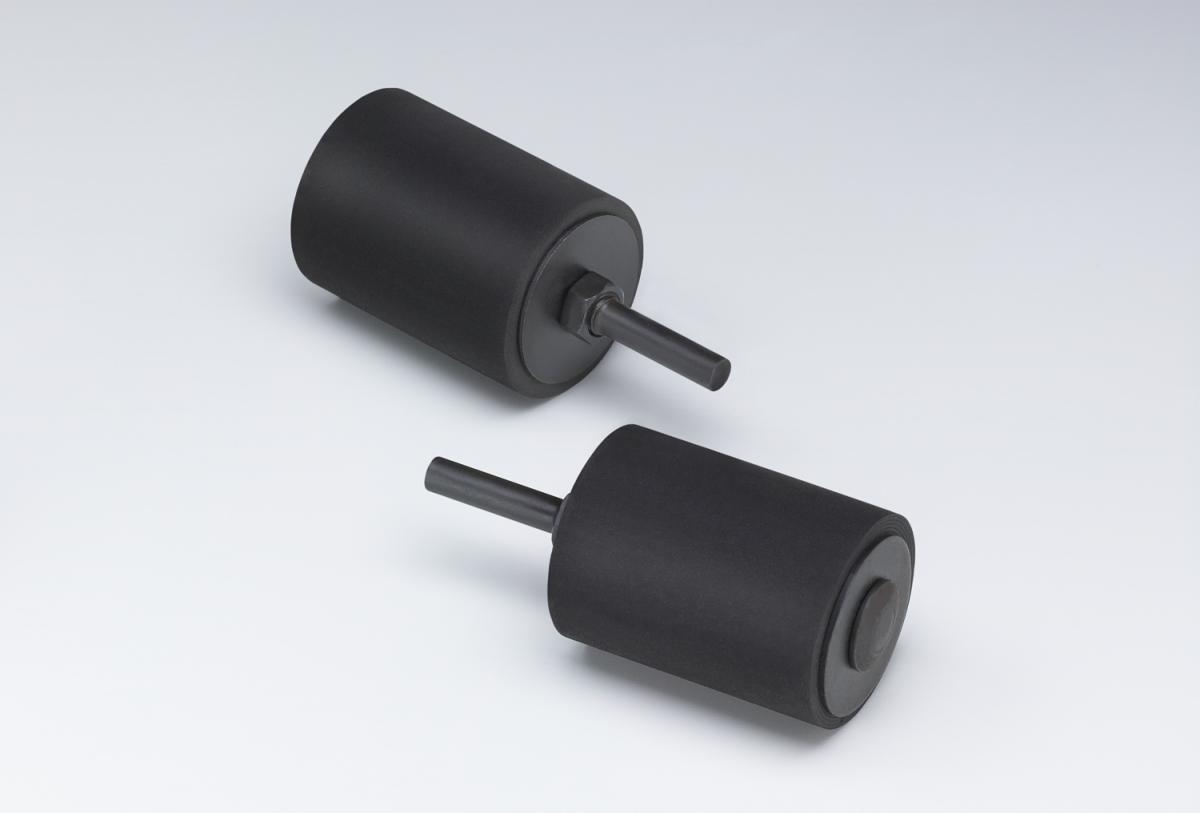
On die grinders and small finishing tools, the wheel itself does most of the tracking work. The 3M™ Rubber Cushion Polishing Wheel 45138 is a mechanically expandable rubber cushion: slide the band on, tighten the lock nut, and the cushion expands to hold the abrasive firmly so it doesn’t slip during use. It also absorbs vibration, which keeps the band seated through long runs.
On larger inline sanders and finishing tools, 3M™ Rubber Slotted Expander Wheels use a different approach. The internal slots let centrifugal force expand the drum as it spins, gripping the belt tighter as speed increases.
Signs your tracking problem is really an accessory problem:
- The belt walks off the wheel even after you’ve reset it
- One edge of the belt wears out while the grain on the other edge is still sharp
- The band spins on the wheel instead of with it
- Vibration increases as the wheel ages, even with a fresh belt
When we see these on a customer’s line, the fix is often a properly sized or replacement wheel, not a different belt.
Pressure: Even Contact Means Even Wear
The wheel’s hardness and shape control how pressure spreads across the belt. A firm wheel concentrates force for faster stock removal. A soft, conformable wheel spreads force out so the abrasive follows the part, which is what you want for blending and cosmetic finishes.
The 3M slotted expander wheel is a good example of softness by design. 3M specifies soft 25-durometer rubber and radiused edges, which help produce a fine finish on stainless and reduce transition lines between passes. The 5 in x 3-1/2 in 28718 and the 3-2/5 in x 3 in 28349 cover broad surfaces, while shank-mounted sizes like the 2 in x 2 in 77721 fit die grinders.
Cushion wheels bring the same benefit to detail work. Because the rubber compresses slightly, the band conforms to curves, tubing, and formed edges instead of riding on one high spot. Smaller options like the 1-1/2 in x 2 in 45130 and 3/4 in x 3/4 in 45146 reach tighter spots.
A quick way to match the wheel to the job:
| Goal | Wheel choice | Why |
| Fast stock removal, weld grinding | Firmer support | Concentrates pressure so grain cuts aggressively |
| Blending and satin finishes on stainless | Soft slotted expander wheel | Spreads pressure, reduces transition lines |
| Contours, tubing, rounded edges | Rubber cushion wheel | Conforms to shape, absorbs vibration |
| Soft or thin metals (aluminum, brass) | Conformable wheel, light pressure | Reduces marking and distortion |
If you’re pairing a soft wheel with an aggressive belt, or a hard wheel with a fine-grit finishing belt, the two are working against each other. That mismatch is one of the most common reasons we see belts underperform.
Belt Life: Protect the Investment You Already Made
Premium belts cost more up front because they’re built to last longer and cut faster. Precision-shaped grain like the kind in 3M™ Cubitron™ II Cloth Belt 984F keeps fracturing into sharp new points, but only if the belt runs flat, tight, and under even pressure. Accessories are what make that possible.
The right setup extends belt life in a few ways:
- Even wear across the width. Good tracking and even pressure use the whole belt instead of burning one edge.
- Less heat. Steady contact means operators don’t have to bear down to compensate, which keeps heat and glazing down.
- Less splice stress. A belt that isn’t slipping or wandering puts less strain on the joint, so it’s less likely to break before the grain is spent.
- Fewer changeovers. Easy-change cushion and expander wheels let operators swap grits quickly without fighting the setup.
The belt itself still matters. Splice, backing weight, and flex all need to match the wheel and the pressure you run. For example, 984F uses a YF-weight backing and a grinding aid built for medium-to-high pressure on stainless, cobalt chrome, and nickel alloys. Our guide to 3M belts for grinding and finishing walks through cloth, film, diamond, and surface conditioning belts in more detail.
A few habits that help any belt last:
- Replace cushion and expander wheels when the rubber hardens, cracks, or loses its grip
- Match wheel diameter and width to the belt size listed on the product
- Store belts flat or hanging in a temperature- and humidity-controlled area so they don’t curl or dry out
- Check tension and tracking at every belt change, not just when problems show up
Get the Whole System Right With JAM
You can buy a 3M belt or expander wheel from plenty of places. What’s harder to find is someone who will look at your tool, your part, and your finish spec and tell you which combination will actually work, and when something newer will work better.
That’s where our team earns its keep. Our people work hands-on with manufacturers every day, and they know the 3M abrasive lineup well enough to spot a mismatch fast. In one recent case, our rep recommended a different product to a customer whose previous supplier hadn’t kept up with what’s new. The result was a tool that lasted four times longer.
When you work with JAM, you get:
- Product expertise on the 3M lineup. We help you match belts, contact wheels, and expander wheels to your material and finish goals.
- Boots-on-the-ground support. We’ll look at what’s happening on your line, not just what’s on the order.
- Fast, local fulfillment. Easy reordering for the belts and accessories you run every week.
- Support built for smaller teams. If you don’t have a dedicated procurement department, we can be the abrasives expert you call.
Ready to get more out of every belt? Browse our band and belt accessories and 3M abrasive products, or contact the JAM team for help choosing the right belt and wheel for your application.